Catching COPD Early: How Breathing Tests and AI Can Help
Confused about asthma vs. COPD? Learn the key differences, warning signs, and how modern diagnostics help detect Chronic Obstructive Pulmonary Disease early.
6/20/20263 min read
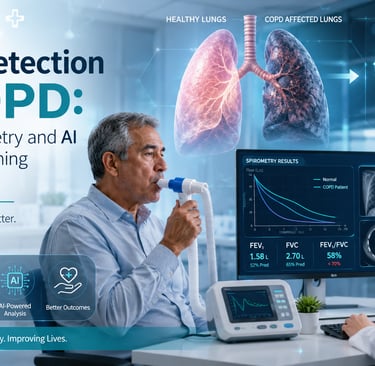
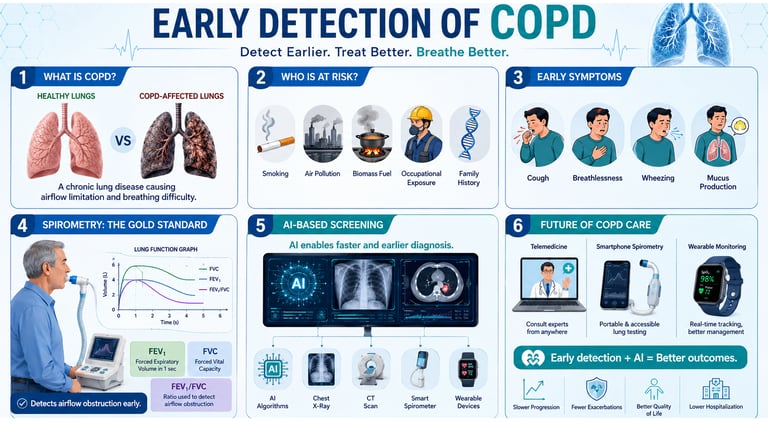
Chronic Obstructive Pulmonary Disease (COPD) is a lung condition that makes breathing harder and harder over time. It includes conditions like chronic bronchitis and emphysema. The tricky part is that it sneaks up on people — symptoms build up so slowly that many don't notice anything is wrong until significant lung damage has already happened.
Why early detection matters
COPD only gets worse with time, and damage already done can't be undone. But if it's caught early, the right COPD treatment can slow it down, ease symptoms, and help patients avoid hospital visits. The problem is that many people ignore early signs like a nagging cough or feeling tired easily, mistaking them for normal aging. Because of this, many people don't get diagnosed until they've already lost over half their lung function — which is why consulting a pulmonologist at the first sign of trouble can make a real difference.
Who's at risk?
Smokers (current or former) — the longer and heavier the smoking history, the higher the risk
People exposed to indoor smoke — especially common in rural areas where cooking is done with wood, coal, or dung as fuel
Workers exposed to dust, chemicals, or fumes on the job
People with a rare genetic condition that makes lungs more vulnerable
If you have a lasting cough, mucus buildup, wheezing, or unexplained shortness of breath, it's worth getting checked — even if you've never smoked.
Difference between asthma and COPD
People often confuse the two, but they're not the same. Asthma usually starts in childhood, comes and goes in episodes, and is often triggered by allergies, exercise, or cold air — and it's generally reversible with treatment. COPD, on the other hand, develops gradually (usually in adults over 40, often with a smoking or pollution history) and causes a steady, ongoing decline in lung function rather than occasional flare-ups. That said, the two conditions can sometimes overlap, which is why a proper diagnosis from a specialist is so important — self-diagnosing based on symptoms alone can be misleading.
Spirometry: the main test doctors use
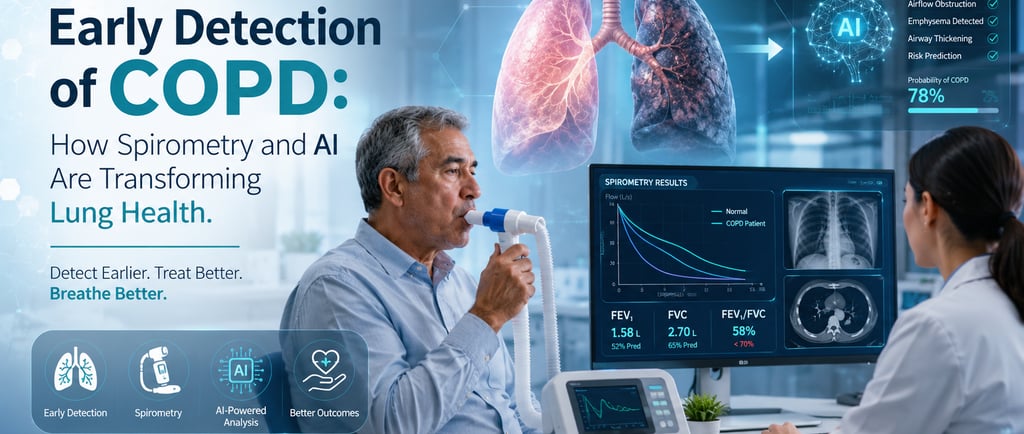
Spirometry is a simple breathing test. You breathe into a tube connected to a machine that measures:
How much air you can blow out in one second
The total amount of air you can exhale
The ratio between the two — a low ratio signals COPD
It's cheap, painless, and works well — but it needs trained staff and proper equipment, which isn't always available in rural areas. It can also miss very early-stage COPD.
How AI is helping
AI is adding a powerful new layer to COPD detection:
Reading X-rays and CT scans: AI can spot tiny changes in lung structure that are too subtle for the human eye to catch, helping flag at-risk patients early.
Improving spirometry tests: AI software can check if a test was done correctly and help interpret results — useful in clinics without specialists on hand.
Wearable devices: Smartwatches and sensors can track breathing, oxygen levels, and coughing patterns continuously, alerting people to early warning signs before a crisis hits.
Challenges still ahead
Many people still don't know much about COPD
Diagnostic tools aren't available everywhere
AI tools need to be trained on data from diverse populations to work well for everyone
Questions remain around privacy, data security, and getting these tools officially approved
Finding the right care
If you or a loved one have symptoms that could point to COPD, don't wait it out. Finding the best doctor for COPD in your area — ideally a pulmonologist with experience in spirometry and modern diagnostic tools — can make the difference between catching the disease early and discovering it after significant damage has already occurred.
The bottom line
Lung damage from COPD can't be reversed, so catching it early is crucial. Spirometry remains the trusted, go-to test, while AI is helping make screening faster, smarter, and more accessible — bringing us closer to catching COPD before it takes hold. If you're experiencing persistent respiratory symptoms, reach out to a specialist who can guide you through proper testing and treatment.
Early action saves lungs — connect with our specialists for the best COPD treatment in Bhubaneswar and start breathing easier today.